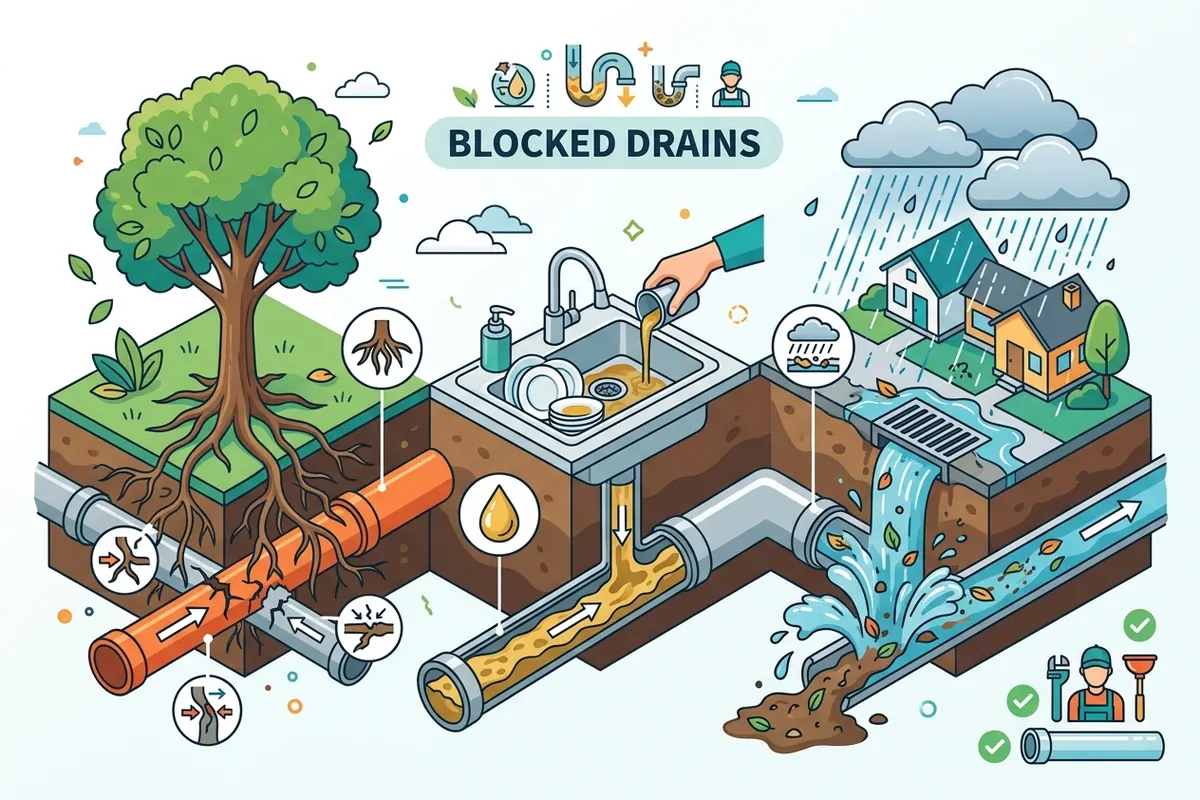
Most blocked drains we clear in Rocky come down to three things: tree roots, cooking fat, and the wet season making everything worse. Knowing what causes blockages helps you avoid them.
Tree roots
The biggest single cause of recurring blockages in Rockhampton. Fig trees and poincianas are particularly aggressive. Roots find tiny gaps in old sewer pipe joints and grow inside the pipe until they block flow.
The classic pattern: a slowly worsening blockage in the same drain every few months. The fix is CCTV first to find the entry point, then either a maintenance jet every 6 to 12 months, or pipe relining for a permanent solution.
Cooking fat and oil
The number one cause of kitchen drain blockages. Hot fat poured down the sink looks fine going down. Then it cools, sticks to the pipe walls, and gradually builds up. After months or years, you have got a solid plug.
Wipe pans with paper towel and bin it. Never pour cooking fat down the sink.
Wet season effects
Rocky's wet season pushes already-stressed drainage systems over the edge. Partial blockages become full blockages when the volume doubles. Stormwater pits overflow when not properly cleared. Sewer mains in the council system back up if heavy rain coincides with peak demand.
Wet wipes
Even the flushable ones. They do not break down like toilet paper. They catch on joins and accumulate. Every blocked toilet line we clear in Rocky has wet wipes in it.
Hair and soap in bathroom drains
The slow-draining shower is almost always hair caught on the drain grate, bound together with soap scum. Lift the grate every couple of months and pull the hair out. Five minutes saves you a callout.
Foreign objects
Kids drop things down toilets and basins. Hair clips, makeup brushes, toy cars, the lot. A drain camera tells us exactly what is in there before we start work.
Prevention checklist
Pour a kettle of boiling water down each drain every couple of months. Clean drain grates regularly. Keep an eye on what your kids drop where. Most importantly, address slow-draining problems early before they become full blockages.