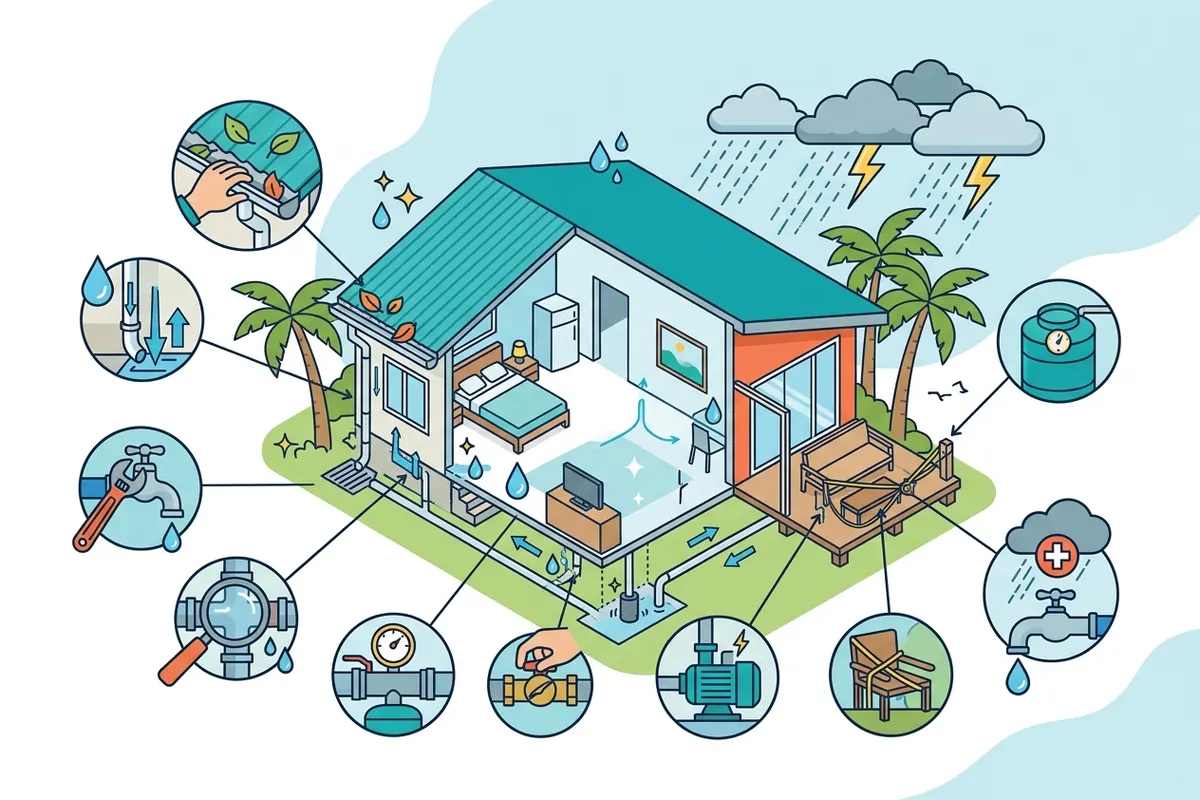
Cyclone season runs November to April in Central Queensland. The plumbing prep is not complicated but it is worth doing before the first warning comes through.
Find your water meter and test the stop tap
If something breaks during a cyclone, you need to shut the water off fast. Walk out to your meter now and lift the lid. Make sure the tap or lever moves freely. If it does not, get a plumber to replace it before storm season. A seized mains valve is the worst thing to discover at 2am during a storm.
Clear your gutters and downpipes
Blocked gutters overflow during heavy rain. Water gets into ceiling cavities and walls and causes a lot more damage than the original problem. Clear gutters in October. Check downpipes flow freely into stormwater.
Check your stormwater drains
Stormwater pits in the yard and along driveways should be cleared of leaves and debris. Run a hose down each one and confirm the water flows away. Blockages turn into floods during the first big storm.
Secure tanks and tall items
Hot water tanks on legs become projectiles in severe wind. Brackets weaken over time, especially the salt-corroded ones. If your tank brackets have been there 15+ years, get them inspected.
Rainwater tanks need similar attention. Lashing straps and concrete pads should be checked.
Outdoor taps and exposed pipework
If you have any exposed PVC pipework on the outside of the house, check that it is supported and not vibrating. Wind can shake pipes loose from fittings.
After the storm
If you lost power for more than a few hours, check pumps and any electric-dependent plumbing. Brown water after supply was off usually clears within 30 seconds of running taps.
If sewer pumps stopped during the outage, check toilets and basins are flushing normally before assuming everything is back.
Emergency contacts
Have a plumber number saved in your phone before storm season. The middle of a cyclone is not when you want to be googling for an emergency plumber.